 |
| chinese new year |
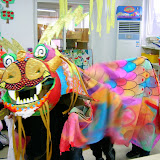
The first graders created a dragon costume in celebration of the New Year . There are many legends about dragons. In the Han Dynasty, people thought dragons could summoun clouds and rain. So when there was arid weather, they would do the dragon dance to seek help from the dragon. This custom has passed from generation to generation and exists even today.
There is no consensus on the origin of mythical Chinese dragon, but many scholars agree that it came from totems of different tribes in China. Some have suggested that it comes from a stylized depiction of existing animals, such as snakes, fish, or crocodiles. For example, the Banpo site of the Yangshao culture in Shaanxi featured an elongated, snake-like fish motif. Archaeologists believe the "long fish" to have evolved into images of the Chinese dragon. The association with fish is reflected in the legend that a carp which is able to leap over the mythical "Dragon Gate" would become a dragon. Several waterfalls and cataracts in China are believed to be the location of the Dragon Gate. This legend is used as an allegory for the drive and effort needed to overcome obstacles and achieve success.
There are four major Dragon Kings, representing each of the four seas: the East Sea (corresponding to the East China Sea), the South Sea (corresponding to the South China Sea), the West Sea (sometimes seen as the Indian Ocean and beyond), and the North Sea (sometimes seen as Lake Baikal).Because of this association, they are seen as "in charge" of water-related weather phenomenon. In premodern times, many Chinese villages (especially those close to rivers and seas) had temples dedicated to their local "dragon king". In times of drought or flooding, it was customary for the local gentry and government officials to lead the community in offering sacrifices and conducting other religious rites to appease the dragon, either to ask for rain or a cessation thereof.


No comments:
Post a Comment